


RHU TIPITCH Project
Transforming the prognosis of Intracerebral haemorrhage
Sustainably improve the prognosis and reduce the after-effects of haemorrhagic strokes through a comprehensive, multidisciplinary approach
Innovating
in Treatments
Three innovative therapeutic strategies targeting the critical phases of intracerebral haemorrhage to reduce mortality and the severity of disability

Structuring a Dedicated Care Pathway
We aim to build a care and research community dedicated to haemorrhagic stroke in order to accelerate the implementation of new treatments.

Relying on
a Unique Consortium
We have brought together a unique consortium of experts, including researchers, clinicians, industry partners, and patient associations.
A Major Public Health Challenge: Haemorrhagic Stroke
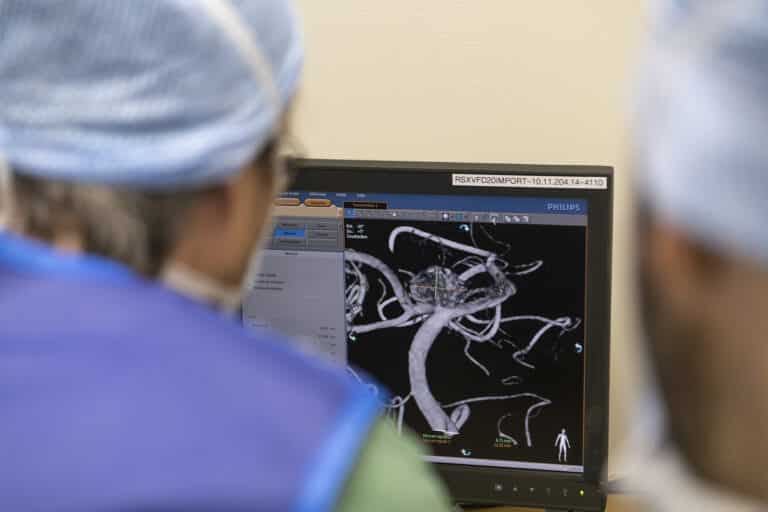
To date, haemorrhagic strokes have not yet benefited from significant therapeutic advances. Each year, millions of people worldwide are affected by a haemorrhagic stroke. This medical emergency is marked by high mortality rates and severe long‑term disabilities in survivors.
Latest news
Frequently Asked Questions (FAQ)
What is the RHU TIPITCH project?
The RHU TIPITCH (Hospital-University Research Program) is a high‑level scientific initiative aimed at significantly transforming the prognosis of patients suffering from intracerebral haemorrhage (ICH). Coordinated by Lille University Hospital, this ambitious project brings together clinical experts, researchers, and industrial partners to develop new therapeutic strategies and reduce both mortality and disability associated with this severe form of stroke.
Which type of stroke does the TIPITCH project specifically target?
The project focuses exclusively on haemorrhagic stroke (also known as spontaneous intracerebral haemorrhage) and not on ischemic stroke. Although less frequent than ischemic stroke, haemorrhagic stroke is highly devastating:
What are the main therapeutic objectives of TIPITCH?
The TIPITCH project is structured around three major medical pillars, each targeting a critical stage of hemorrhagic stroke:
- Preventing haematoma expansion (WP1):
Development of an endovascular device (an intra‑arterial balloon) designed to limit the initial bleeding. - Facilitating hematoma evacuation (WP2):
A clinical trial using a fibrinolytic agent to dissolve the clot in high‑risk patients. - Reducing peri‑haematoma edema (WP3):
Assessment of the effectiveness of Diroximel Fumarate in limiting brain inflammation following hemorrhage.
Who coordinates the TIPITCH project, and who are the partners?
- Hospital and University centers: CHU de Lille, CHU de Limoges, CHRU de Nancy, CHU de Toulouse, CHRU de Tours, University of Lille.
- Research institutes:
- Industrial partner: Balt (specialized in interventional neuroradiology).
- Networks and associations: StrokeLink, Tech4Health, France AVC 37, FNAF Fédération Française des Aphasiques de France
What does “Work Package 4” on the care pathway involve?
Beyond drug‑based or surgical interventions, Work Package 4 (WP4) aims to structure a national network dedicated to the care pathway of patients affected by hemorrhagic stroke. Its objective is to develop a multimodal observational registry and to harmonize clinical practices to ensure optimal and equitable patient management across the entire French territory.
How is the RHU TIPITCH project funded?
The TIPITCH project was selected as a laureate of the “Hospital-University Research in Health” (RHU) call for proposals under the France 2030 program. It receives €9.6 million in funding (ANR-23-RHUS-0006), managed by the French National Research Agency (ANR), to support large‑scale innovation and research.
