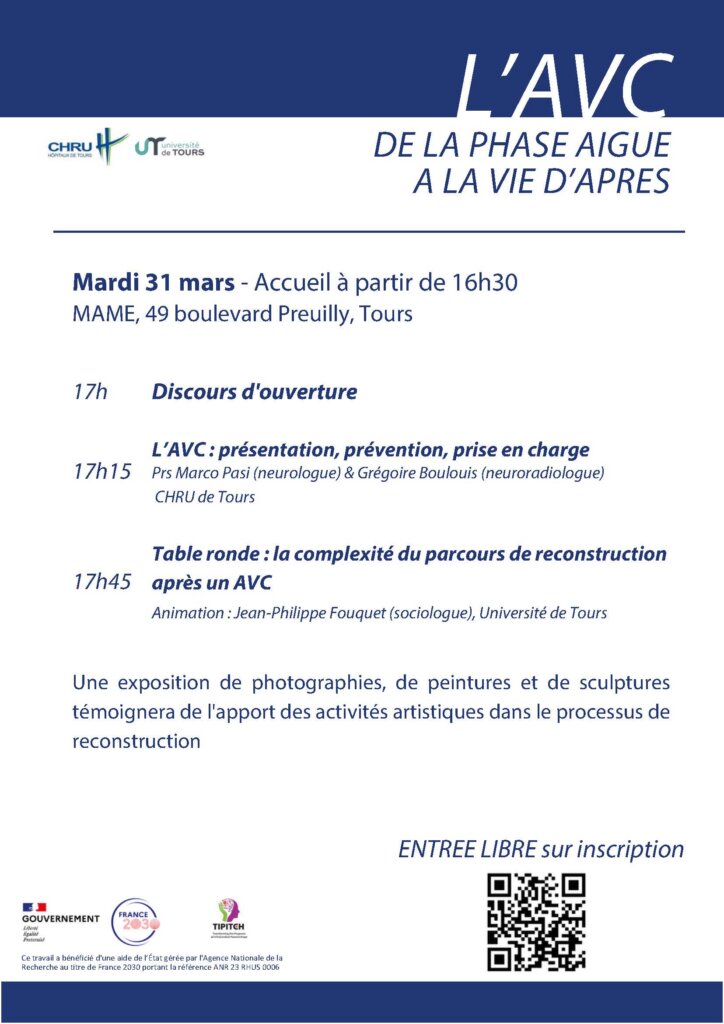


In 2024, stroke remains the leading cause of physical disability in adults. Among the different types of stroke, spontaneous intracerebral haemorrhage (ICH)—accounting for 20% of all strokes—affects 3.5 million people worldwide every year. Nearly half of these patients remain dependent, and no significant improvement in prognosis has been observed in recent years.
This is why TIPITCH, a unique consortium of experts in neurology, haematology, neuroradiology and fundamental research, is working to develop innovative solutions by focusing on three key stages of intracerebral haemorrhage:
🩸 Limiting haematoma expansion
🩸 Enhancing haematoma evacuation
🩸 Reducing peri-haematoma oedema
Led by CHU Lille, TIPITCH is the result of an unprecedented collaboration between researchers (Université de Lille, Inserm), clinicians (CHU Lille, CHRU Tours, CHRU Nancy, CHU Toulouse and CHU Limoges), and industry partners (Op2Lysis, Balt Group). This alliance not only enables the development of therapeutic innovations but also rethinks the organisation of the care pathway for patients affected by haemorrhagic stroke.
The involvement of patient associations is a central component of the project, ensuring that their needs and lived experiences are fully integrated into the research strategy. This work is carried out in close collaboration with StrokeLink, the national clinical research network specialising in stroke.
Funded by the French State and operated by the National Research Agency (ANR) under the France 2030 call for projects (ANR‑23‑RHUS0006), with €9.6 million over five years, this ambitious project aims to fundamentally transform the prognosis of this severe form of stroke.