


TIPITCH: A new generation of researchers committed to advancing haemorrhagic stroke research
In a scientific landscape where it is becoming increasingly difficult to recruit young researchers, the TIPITCH project stands out as an exception.
It brings together nine PhD students working on cutting-edge topics, all focused on improving the prognosis of hemorrhagic strokes.
A source of pride for the consortium, and a strong signal: young researchers are committing themselves, with passion and rigor, to research that truly has meaning.
Diverse backgrounds, one shared ambition
Whether they are medical doctors, engineers, or biologists, TIPITCH’s PhD candidates share a common goal: contributing to medical innovation.
But their paths are far from uniform—and it is this diversity that enriches the project.
But their paths are far from uniform—and it is this diversity that enriches the project.
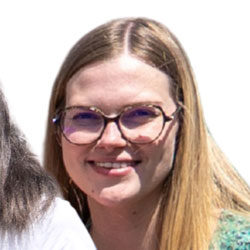
For Charlotte Bocquet, a PhD candidate in biotechnology, it was the desire to “propose ideas, explore, understand” that led her to pursue a doctoral path.
She works on optimising haematoma lysis using an innovative thrombolytic agent, in connection with patients’ haemostatic profiles.
She emphasises: “What I do can have a real impact.”
She works on optimising haematoma lysis using an innovative thrombolytic agent, in connection with patients’ haemostatic profiles.
She emphasises: “What I do can have a real impact.”
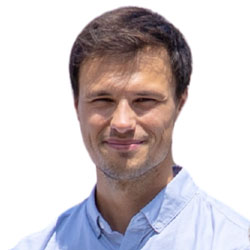
Guillaume Renedo, an engineer specialising in fluid biomechanics, is working alongside industrial partner BALT to develop a medical device capable of modulating blood flow in arteries prone to haemorrhage.
His PhD is based on using numerical simulation as a laboratory: he creates a blood‑flow model of the relevant arteries, in which the device is virtually tested to optimise its parameters.
An innovative approach that reduces physical testing and accelerates design.
His PhD is based on using numerical simulation as a laboratory: he creates a blood‑flow model of the relevant arteries, in which the device is virtually tested to optimise its parameters.
An innovative approach that reduces physical testing and accelerates design.
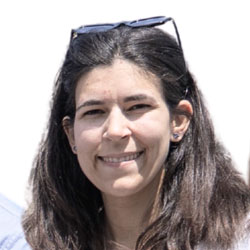
Ophélie Sabardu, radiologist, brings to the project a profile already well‑versed in research.
After several years of clinical and scientific experience, she joined TIPITCH to structure her work within a doctoral framework.
She is developing an artificial intelligence software capable of automatically interpreting MRI scans of haemorrhagic strokes.
The aim: to rapidly identify key information such as haematoma or oedema volume, and to support image analysis in the context of TIPITCH imaging acquisitions.
Her commitment is reflected in strong autonomy and an ability to bring people together around her work, thereby contributing to the project’s collective momentum.
After several years of clinical and scientific experience, she joined TIPITCH to structure her work within a doctoral framework.
She is developing an artificial intelligence software capable of automatically interpreting MRI scans of haemorrhagic strokes.
The aim: to rapidly identify key information such as haematoma or oedema volume, and to support image analysis in the context of TIPITCH imaging acquisitions.
Her commitment is reflected in strong autonomy and an ability to bring people together around her work, thereby contributing to the project’s collective momentum.
A collaborative and inspiring research environment
All of them describe an environment where interdisciplinary exchanges fuel reflection and creativity.
TIPITCH meetings and interactions with clinicians, engineers, and industry partners offer constant opportunities to challenge ideas and refine approaches.
Charlotte appreciates “the rare collaborative energy, with people from all over France moving forward together.”
Guillaume speaks of “real firepower”, and Ophélie highlights “the dynamism and strong commitment of the teams.”
This cross‑disciplinary approach is a real asset: it encourages initiative, fosters the exchange of perspectives, and supports the development of innovative solutions.
TIPITCH meetings and interactions with clinicians, engineers, and industry partners offer constant opportunities to challenge ideas and refine approaches.
Charlotte appreciates “the rare collaborative energy, with people from all over France moving forward together.”
Guillaume speaks of “real firepower”, and Ophélie highlights “the dynamism and strong commitment of the teams.”
This cross‑disciplinary approach is a real asset: it encourages initiative, fosters the exchange of perspectives, and supports the development of innovative solutions.
A scientific and human adventure
Beyond the thesis topics themselves, TIPITCH provides an experience that strengthens key skills: networking, visibility, the ability to engage with industrial, hospital and academic partners.
For some, it represents a stepping stone towards a research or innovation career; for others, like Ophélie, it is the natural continuation of an already well‑established scientific commitment.
Each of them, in their own way, embodies the future of medical research.
A huge thank you to Charlotte Bocquet, Guillaume Renedo, Ophélie Sabardu, and all the PhD candidates of the TIPITCH project for their daily dedication.
You are living proof that innovation is also born from curiosity, collective effort, and the desire to make things better.
For some, it represents a stepping stone towards a research or innovation career; for others, like Ophélie, it is the natural continuation of an already well‑established scientific commitment.
Each of them, in their own way, embodies the future of medical research.
A huge thank you to Charlotte Bocquet, Guillaume Renedo, Ophélie Sabardu, and all the PhD candidates of the TIPITCH project for their daily dedication.
You are living proof that innovation is also born from curiosity, collective effort, and the desire to make things better.
