Présentation du
Projet RHU TIPITCH

About

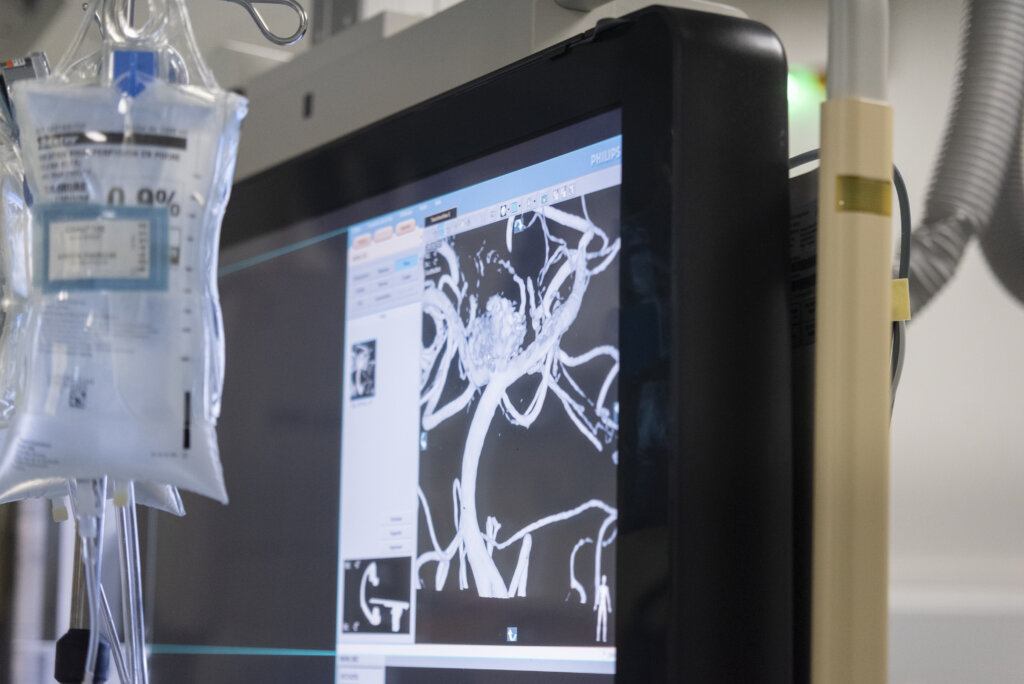
TIPITCH is a hospital–university research project aiming to reduce early mortality and the severity of disability in people affected by hemorrhagic stroke by providing distinct and complementary treatments targeting the three key stages of intracerebral hemorrhage.

The project is led by Professor Charlotte Cordonnier, Head of the Neurology Department at Lille University Hospital. She is internationally recognized for her medical expertise in cerebrovascular diseases and for her research work on stroke. Lille University Hospital (CHU de Lille) is the coordinating institution.

Pr Charlotte Cordonnier

Head of the Neurology Department at Lille University Hospital
Coordinator of the TIPITCH project

The 5-year challenge of the RHU TIPITCH

A structured
care pathway

Specific to intracerebral
hemorrhage

Innovative
treatments

At the critical stages of intracerebral hemorrhage

A unique consortium of experts

Including researchers, clinicians, industry partners, and patient associations.

The origins of the RHU TIPITCH

Stroke is the leading cause of acquired physical disability.
1 st
Leading cause of death among women.
1 st
People affected each year worldwide by an intracerebral haemorrhage.
0 M
Mortality rate within the first month following an intracerebral haemorrhage.
0 %
Of survivors remain dependent in their daily life after a haemorrhagic stroke.
0 %
Sources: INSERM, WHO, Santé publique France / Health Insurance

In 2023, stroke became the leading cause of physical disability among adults worldwide.

Among these, intracerebral hemorrhage (ICH) is the second most common subtype, affecting 3.5 million people each year.

Intracerebral hemorrhage is also the deadliest form of acute stroke, with a short-term mortality rate of around 40%, representing approximately 1.5 million deaths per year.

Unfortunately, prospects for improvement remain limited, and nearly half of survivors are left with severe dependency.

This dramatic situation has a major social and economic impact. The lack of effective treatments largely contributes to this medical and human tragedy.

© CHU de LILLE

The objectives of the RHU TIPITCH

“The RHU TIPITCH project aims to sustainably improve prognosis and reduce the sequelae of spontaneous intracerebral hemorrhage by:

Developing new innovative treatments – Structuring a care pathway specific to spontaneous intracerebral hemorrhage”

“The research work on cerebral hemorrhages carried out over the past 20 years by our Lille-based team has led us to propose new treatments. We are bringing together French talents around an ambitious project that will improve care and research in this severe disease.”

Pr Charlotte Cordonnier

Head of the Neurology Department at Lille University Hospital
Coordinator of the TIPITCH project

“We are going to set up a national registry. This way, every patient admitted to a neurovascular unit in France with a cerebral hemorrhage will be able to contribute to improving our knowledge of this disease. By bringing together all this information, we will be able to analyze patients’ health trajectories and thus improve their prognosis.”

Pr Grégoire BOULOUIS

Interventional neuroradiologist, Tours University Hospital (CHRU de Tours)
Consortium member

Who are we?

The RHU TIPITCH project brings together an internationally renowned consortium with complementary expertise in fundamental, translational, and clinical research. All stakeholders are international leaders and are highly active in the fields of intracerebral hemorrhage, interventional neuroradiology, neuroimaging, and hemostasis. The project partners have extensive experience working together. Together, they aim to create a true paradigm shift in the management of intracerebral hemorrhage and in public health.

Researchers and clinicians

Industry partner

Networks

Patient association
Patient association
0 M€

Funding (ANR-23-RHUS-0006)

The RHU TIPITCH project is a winner of the call for projects “Hospital–University Health Research” (RHU) under the France 2030 program, operated by the French National Research Agency (ANR). This program aims to support large-scale, innovative research projects in the field of health.