


Intracerebral hemorrhage is one of the most severe forms of stroke. Yet, despite its seriousness, it remains less extensively studied than other neurovascular conditions. This lack of knowledge limits our ability to optimize patient care and develop new therapeutic strategies.
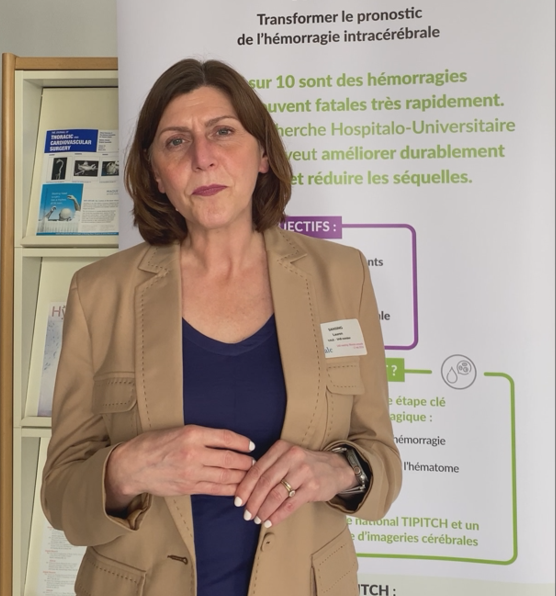
To address this challenge, the TIPITCH project relies on a major research tool: a large national cohort designed to follow patients who have experienced spontaneous intracerebral hemorrhage, from hospital admission through several years after the event. Coordinated by the Tours-based teams led by Professor Marco Pasi, a neurologist at Tours University Hospital (CHRU de Tours), this cohort aims to create a unique resource for understanding the natural history of the disease, harmonizing clinical practices, and paving the way for tomorrow’s treatments.
Understanding a Disease That Remains Poorly Understood
A cohort consists of a group of patients with the same condition who are followed over time in order to observe how their disease evolves. In the case of TIPITCH, this approach takes on particular importance because, as Professor Pasi puts it, intracerebral hemorrhage remains “the poor relation of stroke research.” We still have an incomplete understanding of the different stages of the disease, from the first hours following the bleeding event to the consequences that may emerge several years later.
The TIPITCH cohort was therefore designed to document the entire course of the disease. Its ambition is twofold: to better understand the biological mechanisms that influence the progression of intracerebral hemorrhage and to analyze, on a large scale, how patients are actually managed across France.
Mapping Clinical Practices to Reduce Inequalities in Care
One of the first questions the cohort aims to answer is straightforward: do all patients currently receive the same quality of care?
International guidelines recommend a comprehensive approach, including strict blood pressure control, management of anticoagulant treatments, neurosurgical assessment when necessary, and admission to a specialized stroke unit. But in everyday clinical practice, are these approaches being applied consistently?
By enrolling patients at twelve centers across France, the TIPITCH cohort will make it possible to create a detailed map of how intracerebral hemorrhage is managed nationwide. The goal is not merely descriptive: it is also to identify opportunities for improvement that could reduce disparities and give every patient the best possible chance of recovery.
Taking a Closer Look at the Mechanisms of the Disease
Beyond clinical practices, the cohort represents a powerful tool for clinical research.
One of the major challenges is understanding why some patients experience hematoma expansion, why others develop significant brain edema, and why hematoma resolution occurs more rapidly in some patients than in others. These phenomena are major determinants of outcome following intracerebral hemorrhage.
To address these questions, the cohort combines several types of data: clinical information, advanced brain imaging, and biological samples collected throughout the patient’s care pathway. This multidimensional approach will make it possible to study the disease from different perspectives and identify new therapeutic targets
2,500 Patients Followed Over the Long Term
The TIPITCH cohort plans to enroll at least 2,500 patients with spontaneous intracerebral hemorrhage across 12 French centers. Patients are enrolled upon hospital admission and receive particularly comprehensive follow-up.
During hospitalization, the teams collect detailed clinical data, perform specific imaging examinations, and obtain biological samples for future analyses. Patients are then reassessed at six months, including a new MRI scan and an assessment of functional recovery. For some patients, a comprehensive neuropsychological assessment is also offered. Finally, follow-up continues for up to two years in order to better understand the longer-term consequences of the disease.
Research Designed Together with Patients
One of the distinctive features of TIPITCH is the active involvement of patients in the development of the project.
Patient representatives have taken part in dedicated meetings, contributed to the development of information materials, and provided their perspectives on the cohort’s objectives. Their experience enriches the scientific approach by incorporating aspects that may sometimes be overlooked in traditional studies, particularly the long-term impact of intracerebral hemorrhage on quality of life.
Discussion groups, facilitated with the support of a sociologist, have also made it possible to collect and analyze the experiences of patients and their families. These discussions help researchers better define the outcomes that truly matter to those affected by the disease.
A Foundation for Tomorrow’s Treatments
The TIPITCH cohort does not directly test a treatment. Nevertheless, its potential impact is considerable.
By identifying factors associated with better recovery, gaining a deeper understanding of the biological mechanisms underlying the disease, and determining which care strategies are most effective, the cohort will create the conditions needed to develop future therapeutic innovations.
Ultimately, the ambition is clear: to help standardize the management of intracerebral hemorrhage across France, improve patient outcomes, and generate the knowledge needed to develop tomorrow’s treatments. Because understanding intracerebral hemorrhage better today means offering patients greater prospects for recovery tomorrow.
Key Takeaway
The national TIPITCH cohort has two main ambitions: to improve and harmonize the management of intracerebral hemorrhage in France, while generating the knowledge essential for identifying tomorrow’s therapeutic strategies.
